In the quiet hum of server farms and the intricate dance of algorithms, a new paradigm is emerging in our understanding of global wellbeing. The concept of planetary health coordinates represents a revolutionary framework where artificial intelligence serves as the critical connective tissue between human health and environmental stability. This isn't merely about tracking isolated health metrics or monitoring environmental changes in separate silos. Rather, it's about understanding that the coordinates of human wellness are intrinsically tied to the coordinates of planetary vitality.
The fundamental premise rests on recognizing that human health doesn't exist in a vacuum. Our wellbeing is deeply embedded within environmental contexts—from the quality of air we breathe to the stability of climate patterns that govern food production. Traditional approaches have struggled to capture these complex interdependencies, often treating health systems and environmental monitoring as separate domains with limited interaction. The planetary health coordinates system seeks to bridge this historical divide through sophisticated AI networks that process multidimensional data in real time.
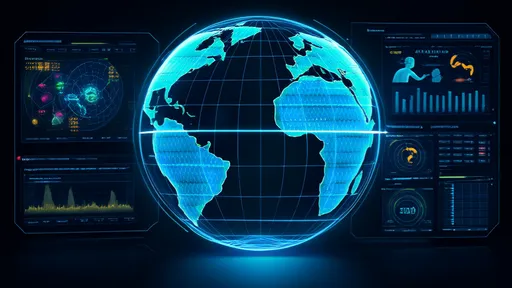
What makes this approach particularly powerful is its capacity to identify patterns invisible to human observation. Machine learning algorithms can detect subtle correlations between, for instance, deforestation rates in one region and respiratory illness patterns in another. These systems process satellite imagery, atmospheric data, urban infrastructure information, and public health records simultaneously, creating a living map of planetary health that evolves with each new data point. The coordinates don't just represent geographical locations but complex intersections of biological, environmental, and social factors.
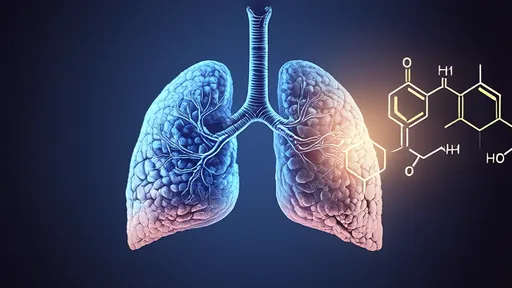
Consider air quality monitoring, which has traditionally relied on stationary sensors providing limited local data. Within the planetary health coordinates framework, AI systems integrate satellite-based aerosol measurements, weather pattern predictions, traffic flow data, industrial emission reports, and real-time health service utilization statistics. This creates a dynamic model that can predict how air quality events might ripple through human populations, potentially identifying vulnerable communities days before pollution levels become critical.
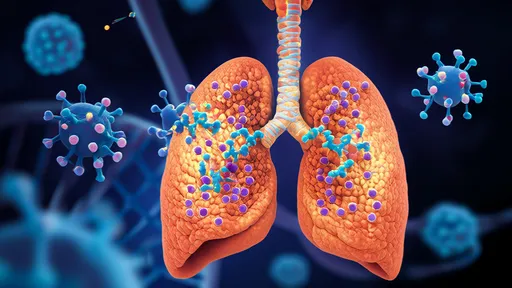
The implications for pandemic prevention are equally profound. By analyzing changes in land use, wildlife migration patterns, climate anomalies, and global travel networks, AI systems can identify conditions conducive to disease emergence and spread. These aren't simple cause-and-effect predictions but complex probability models that account for dozens of interacting variables. The system might flag a particular combination of deforestation, temperature shifts, and agricultural practices as creating elevated risk for zoonotic disease transmission, allowing for targeted interventions before outbreaks occur.
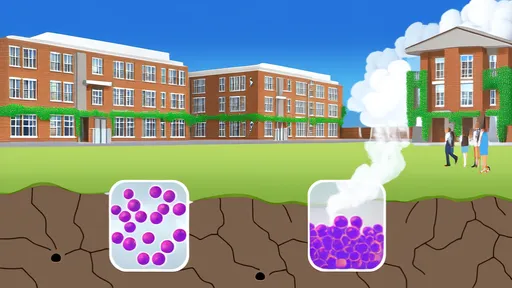
Water security represents another domain where this approach demonstrates remarkable potential. AI models can now correlate glacier melt rates with downstream agricultural viability, urban water infrastructure capacity, and projected population health outcomes. These systems don't just track water quantity but quality, connecting industrial discharge patterns with treatment facility capabilities and community health indicators. The resulting insights enable more nuanced water management strategies that account for both human needs and ecosystem preservation.
What's particularly fascinating is how these systems learn and adapt over time. Unlike static models, the planetary health coordinates framework incorporates continuous feedback loops. When predictions prove accurate, the underlying algorithms strengthen their weighting of certain variables. When predictions miss the mark, the systems recalibrate, often discovering new relationships between seemingly disconnected phenomena. This creates an increasingly sophisticated understanding of how planetary systems and human systems co-evolve.
The ethical dimensions of this approach warrant careful consideration. As AI systems gain deeper insight into the connections between environment and health, questions about data ownership, privacy, and equitable access become increasingly pressing. There's a real risk that the benefits of these advanced monitoring systems could disproportionately flow to wealthy nations and communities, potentially exacerbating existing global health disparities. Developing robust governance frameworks that ensure these tools serve humanity broadly, rather than narrowly defined interests, represents one of the most significant challenges ahead.
Implementation challenges are substantial but not insurmountable. Data standardization across different countries and monitoring systems requires extensive international cooperation. Computational demands are significant, though advances in quantum computing and edge computing offer promising pathways. Perhaps most importantly, building trust among diverse stakeholders—from government agencies to indigenous communities—demands transparent design processes and clear demonstrations of benefit.
The business case for adopting planetary health coordinates is strengthening as well. Companies are beginning to recognize that environmental intelligence directly impacts operational resilience, supply chain stability, and workforce productivity. Insurance industries are particularly interested in how these systems might improve risk modeling for climate-related events and their health consequences. The traditional separation between environmental risk assessment and health risk assessment is becoming increasingly untenable as the connections between them grow more evident.
Looking forward, the planetary health coordinates framework points toward a future where policy decisions account for health-environment interactions as a matter of course. Urban planning, agricultural development, energy infrastructure—all could be informed by AI systems that model how these choices ripple through both ecological and human systems. This represents a fundamental shift from reactive approaches to proactive, preventive governance that recognizes the inseparability of planetary and human wellbeing.
The ultimate promise lies in creating a more resilient global system. By understanding the precise coordinates where environmental stress translates into human suffering, we can deploy resources more effectively, design interventions more precisely, and build societies better adapted to the realities of an interconnected planet. The AI systems serving as the nervous system for this approach don't replace human judgment but enhance it, providing decision-makers with insights drawn from patterns too complex for any individual or institution to comprehend alone.
As these systems mature, they're likely to reveal connections we haven't yet imagined—between ocean current shifts and mental health trends, between soil microbiome changes and nutritional outcomes, between nocturnal light pollution and metabolic disorders. Each discovered relationship adds another layer to our understanding of what it means to be healthy on a living planet. The coordinates aren't just mapping what is but helping us navigate toward what could be—a future where human prosperity and planetary vitality reinforce rather than undermine each other.
The journey toward fully realizing this vision will require collaboration across disciplines that have historically operated in isolation. Climate scientists will need to work alongside epidemiologists, data engineers with ethicists, policy makers with community leaders. What binds these diverse fields together is the recognition that the coordinates of human health extend far beyond clinic walls and into the complex systems that sustain life on Earth. In mapping these connections, we're not just charting territory but rediscovering our place within the planetary whole.

By /Oct 14, 2025

By /Oct 14, 2025

By /Oct 14, 2025

By /Oct 14, 2025

By /Oct 14, 2025
By /Oct 14, 2025

By /Oct 14, 2025

By /Oct 14, 2025

By /Oct 14, 2025

By /Oct 14, 2025
By /Oct 14, 2025

By /Oct 14, 2025
By /Oct 14, 2025

By /Oct 14, 2025

By /Oct 14, 2025

By /Oct 14, 2025

By /Oct 14, 2025

By /Oct 14, 2025
By /Oct 14, 2025

By /Oct 14, 2025
