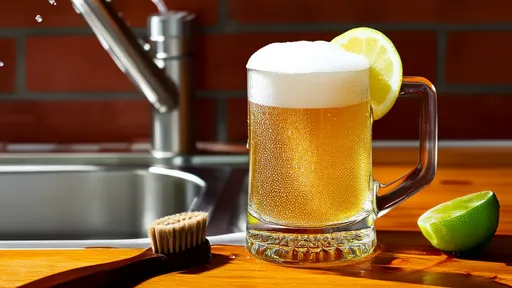
There is a quiet ritual practiced in the dimly lit cellars of old-world breweries and the polished kitchens of modern beer aficionados. It is a method passed down through generations, a simple yet profoundly effective solution to a problem as old as brewing itself: the stubborn, unsightly residue that clings to the inside of a beer glass. This is not a story of harsh chemicals or expensive gadgets, but of a humble kitchen staple—common table salt. The technique of scrubbing a beer glass with salt is a piece of living history, a testament to the power of simplicity in achieving a perfect, spotless, and streak-free shine.
The enemy of every pristine beer glass is a complex combination of oils and proteins. With every sip of a finely crafted ale or a rich stout, a drinker’s lips deposit natural skin oils onto the rim. From the beer itself, proteins and hop resins leave an invisible film on the interior. Over time, and especially if glasses are merely rinsed or washed with inadequate soap, this film builds up. It creates a microscopic layer of grime that not only looks cloudy and unappealing but, more critically, annihilates the very experience of drinking beer. This residue kills the formation of a proper head of foam, causes bubbles to cling to the side of the glass in an unsightly manner, and can impart off-flavors to subsequent beers. It is the difference between a magnificent, aromatic pour and a flat, disappointing one.
This is where the magic of salt enters the picture. On a fundamental level, salt is a crystalline solid. Each granule, even the fine grains of table salt, possesses microscopic edges and a rough texture. When used as an abrasive, these tiny crystals act like thousands of miniature scrub brushes. They are hard enough to scour away the tenacious oily and protein-based film that water and soap alone often leave behind. Yet, for glass—a material harder than salt—these crystals are soft enough that they will not cause any scratches or etching. This is the crucial balance that makes salt the ideal agent. It provides the necessary abrasion without the damage that harsher scouring powders or metal pads can inflict, preserving the clarity and smoothness of the glass for a lifetime of use.
The process itself is wonderfully straightforward, requiring no special equipment. Begin by giving the glass a thorough rinse with warm water to remove any loose debris. Then, pour a generous tablespoon or two of coarse salt directly into the damp glass. The slightly larger granules of kosher or sea salt are often preferred for their enhanced scrubbing power, but standard table salt works perfectly well. Next, add just a few drops of water—enough to create a thick, gritty paste with the salt. Now, using your fingers or a clean cloth, vigorously scrub the entire interior surface of the glass. Pay special attention to the bottom and the sides, applying firm pressure and working the paste in a circular motion. The abrasive action of the salt paste will immediately begin to break down the residue. You will often feel the surface of the glass transition from a slight slickness to a distinct squeaky clean texture under your fingertips.
Once you have scrubbed every inch of the glass’s interior, the final step is a comprehensive and thorough rinse. This is non-negotiable. Use copious amounts of warm water, ensuring every single grain of salt and every last bit of dislodged grime is washed completely down the drain. Any leftover salt will not only affect the taste of your next beer but will also leave a white, powdery residue upon drying, defeating the entire purpose. After rinsing, hold the glass up to the light. You should be met with a brilliant, crystal-clear shine, utterly free of streaks, cloudiness, or water spots. To achieve a truly professional-level finish, many experts recommend a final rinse with cold water and allowing the glass to air dry upside down on a clean rack, avoiding any contact with towels that can leave lint or traces of detergent.
The advantages of this method extend far beyond just a visually clean glass. A salt-scrubbed glass is a chemically clean glass. By utterly removing the oil and protein film, you restore the glass’s ability to showcase a beer as its brewer intended. You will witness the dramatic improvement in head retention—the foam will be dense, persistent, and creamy, lacing the glass with beautiful patterns as you drink. The carbonation will be livelier, with a steady stream of bubbles rising from nucleation points in the glass rather than clinging stubbornly to the sides. Most importantly, the true aroma and flavor of the beer are allowed to shine through unobstructed, without any risk of being tainted by the ghosts of beers past. It is the ultimate act of respect for the craft of brewing.
In a world increasingly dominated by specialized cleaning products, each claiming to solve a hyper-specific problem, the enduring efficacy of salt is a powerful reminder. It champions the virtues of simplicity, sustainability, and sheer effectiveness. It requires no plastic packaging, no complex supply chain, and poses no environmental threat. It is a zero-waste, immensely affordable, and universally available solution that has stood the test of time. For anyone who truly appreciates the art of beer, mastering the salt scrub is not just a cleaning tip; it is an essential skill. It is the final, crucial step in the journey from brewery to palate, ensuring that every pint poured is a perfect one.

By /Aug 20, 2025

By /Aug 20, 2025

By /Aug 20, 2025

By /Aug 20, 2025
By /Aug 20, 2025

By /Aug 20, 2025
By /Aug 20, 2025

By /Aug 20, 2025

By /Aug 20, 2025

By /Aug 20, 2025

By /Aug 20, 2025
By /Aug 20, 2025
By /Aug 20, 2025
By /Aug 20, 2025
By /Aug 20, 2025

By /Aug 20, 2025

By /Aug 20, 2025

By /Aug 20, 2025

By /Aug 20, 2025

By /Aug 20, 2025
